Custom paper boxes can help e-commerce brands reduce shipping costs by using right-sized packaging, lighter materials, space-efficient structures, and optimized product-to-box dimensions. This is especially important because major carriers such as FedEx and UPS may calculate shipping charges using dimensional weight when a package takes up more space than its actual weight.
Instead of choosing a standard box that is larger than necessary, brands can customize the box dimensions, structure, inserts, and materials around the actual product. The result can be less empty space, less cushioning material, better carton utilization, and potentially lower transportation costs.
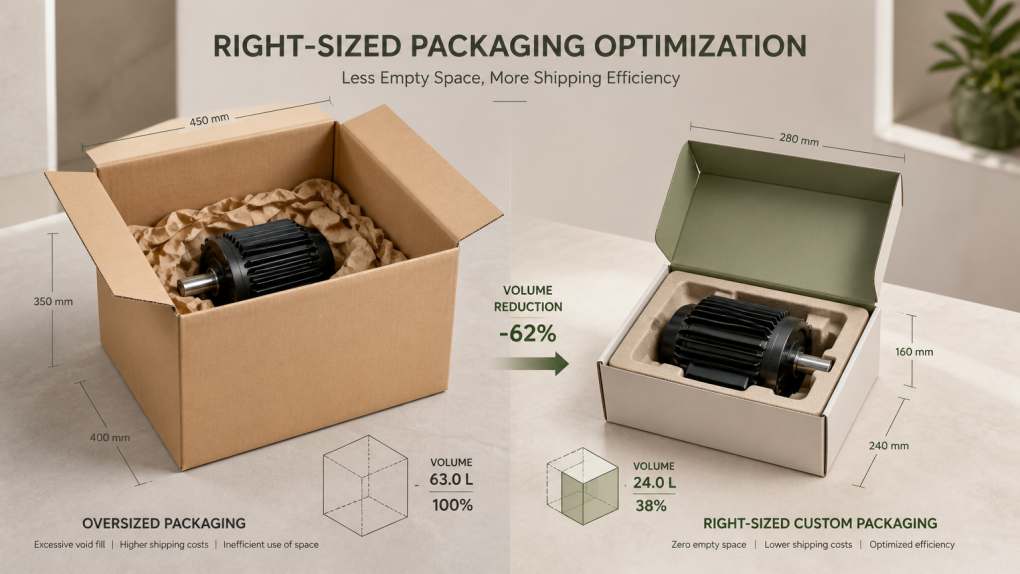
One of the biggest hidden costs in e-commerce packaging is empty space.
For example, imagine a small jewelry product placed inside a large standard box. The product itself may weigh only 1–2 lb, but the carrier may calculate the shipment based on the amount of space that box occupies.
FedEx explains that dimensional weight reflects the amount of space a package occupies compared with its actual weight. Its U.S. formula uses the package's length × width × height divided by 139, with shipping charges based on either dimensional weight or actual weight, whichever is greater.
UPS similarly uses dimensional weight when a package is large relative to its actual weight.
This means that reducing unnecessary package volume can directly affect shipping economics.
For example:
| Package | Dimensions | Approx. Dimensional Weight* |
|---|---|---|
| Oversized box | 12 × 10 × 6 in | 5.2 lb |
| Right-sized box | 10 × 8 × 4 in | 2.3 lb |
*Illustrative calculation using a divisor of 139. Actual carrier charges vary by service, destination, rate type, and other factors.
The key point is simple: you may be paying to transport empty space.
Right-sizing means designing the packaging around the actual product instead of forcing the product into an existing standard box.
A custom paper box can be designed according to:
For jewelry brands, for example, a custom jewelry box can be designed specifically around a necklace, ring, bracelet, or earring set.
Instead of using one oversized box for every product, brands can develop different box sizes or structures for different SKUs.
FedEx specifically recommends choosing packaging that matches the size and fragility of the item and notes that right-sizing can improve packaging efficiency and potentially reduce shipping supply costs.
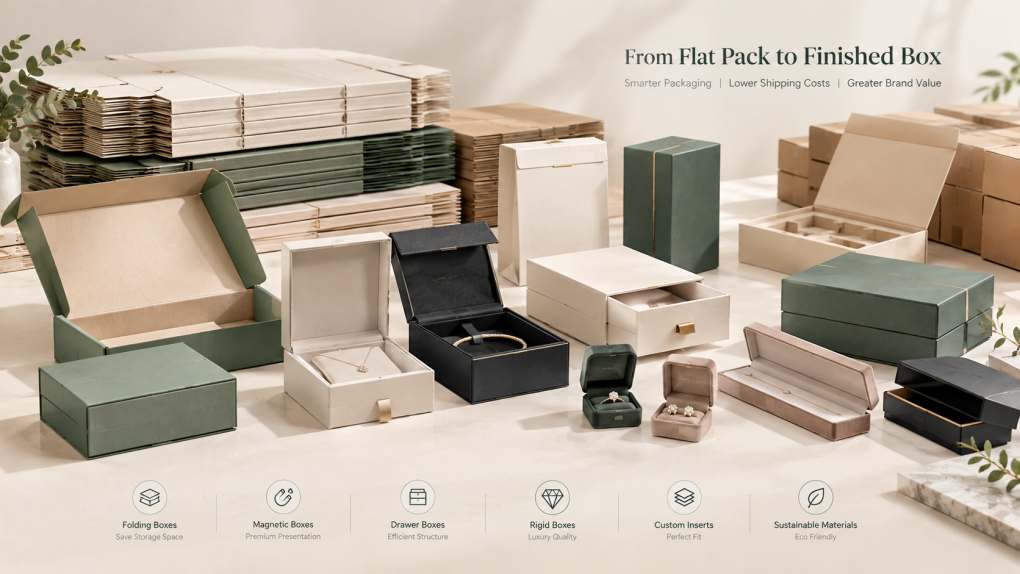
Box structure can also influence logistics efficiency.
For some e-commerce products, a folding paper box can be more efficient than a fully assembled rigid box because it can be shipped and stored flat before use.
This can provide several advantages:
Flat storage → Less warehouse space → More units per shipment → Lower handling and storage requirements
Magnetic folding boxes, folding gift boxes, and other collapsible paper structures can therefore be useful when a brand wants premium presentation without shipping fully assembled packaging throughout the supply chain.
The right structure depends on the product, protection requirements, order volume, and fulfillment process.
Removing empty space does not mean simply making the box smaller.
The packaging still needs enough room to protect the product from compression, impact, and movement during transportation.
A well-designed custom box can combine:
UPS notes that right-sized packaging helps prevent products from moving around inside an oversized box while maintaining appropriate protection for premium goods.
For luxury products such as jewelry, cosmetics, watches, and premium gifts, this balance is particularly important. The goal is not the smallest possible box; it is the most efficient box that still protects the product.
Package weight is another important consideration.
A custom packaging manufacturer can evaluate paperboard thickness, structural design, inserts, and unnecessary components to create a package that provides the required strength without excessive material.
For high-volume e-commerce brands, even a small reduction per package can become meaningful when multiplied across thousands of shipments.
For example, if a brand ships 20,000 orders per month and reduces packaging weight by 30 grams per order, that represents approximately 600 kg less packaging material moving through the logistics system each month.
This is an illustrative calculation rather than a guaranteed freight saving, because actual transportation pricing depends on the carrier, route, service, package dimensions, and weight.
Filterbuy, an online air-filter retailer, worked with Packsize and Paccurate to create right-sized boxes for different order profiles.
The system calculates the required packaging configuration and produces a box matched to each order. Packsize reports that the approach replaced manual box selection with a synchronized right-sizing workflow.
The example shows how packaging customization can become part of a broader fulfillment strategy rather than simply a branding decision.
Another e-commerce packaging case study reported by ITB Packaging documented $6.18–$7.53 in shipping savings per shipment after reducing dimensional weight from 28 DIM lb to 15 DIM lb. The result is specific to that case and should not be treated as a universal saving for every e-commerce shipment.
| Factor | Standard Box | Custom Paper Box |
|---|---|---|
| Size | Limited standard dimensions | Designed around the product |
| Empty Space | May be excessive | Can be minimized |
| Dimensional Weight | Potentially higher | Can be optimized |
| Inserts | Standard or added separately | Custom-designed |
| Storage | Depends on structure | Folding options can save space |
| Branding | Limited | Full customization |
| Product Experience | Generic | Brand-specific |
| Best For | Simple, standardized products | Branded e-commerce products and premium goods |
Custom packaging does not automatically mean lower shipping costs. The savings depend on the product, shipping profile, order volume, carrier rules, and packaging design. However, customization gives brands more control over the variables that influence shipping efficiency.
Before developing a new packaging structure, e-commerce brands should provide their packaging supplier with:
A professional packaging supplier can then evaluate the box dimensions, structure, insert, material thickness, and folding method together.
For B2B buyers, this approach can be more effective than simply asking for the “cheapest box.”
The better question is:
“How can we create packaging that balances product protection, brand presentation, material efficiency, and total logistics cost?”
Yes, they can potentially reduce shipping costs when customization allows a brand to reduce package volume, dimensional weight, unnecessary material, or void space. Actual savings depend on the carrier, destination, product, and shipping method.
No. Packaging that is too small may damage the product or provide insufficient protection. The objective is right-sizing, not simply making the box as small as possible.
They can be advantageous when flat storage and transportation are important. Folding structures may reduce the space required before assembly, but the best structure depends on the product and fulfillment process.
Products with unusual dimensions, premium products, multiple SKUs, fragile products, and brands shipping high order volumes can particularly benefit from packaging optimization.
Ask about box dimensions, materials, structure, inserts, prototype development, MOQ, production lead time, quality control, and whether the supplier can optimize the packaging for your product and shipping requirements.
For e-commerce brands, packaging is more than a container. Box dimensions, structure, material, and inserts can all influence the total cost of getting a product from the warehouse to the customer.
A well-designed custom paper box can help reduce unnecessary space, optimize dimensional weight, improve storage efficiency, and maintain a premium unboxing experience.
For brands shipping thousands of orders, even a small improvement in packaging efficiency can become significant at scale.
Airetion provides custom paper box and jewelry box solutions for brands looking for the right balance of structure, presentation, customization, and production efficiency. From folding boxes and magnetic boxes to drawer and rigid jewelry boxes, Airetion supports OEM/ODM packaging development for B2B customers.
Have a packaging idea? Send an inquiry to discuss your box dimensions, materials, structure, and customization requirements.
Contact Airetion for a Custom Packaging Quote


Copyright © 2026 XIAMEN AIRETION TECHNOLOGY CO. LTD.. All Rights Reserved.




 IPv6 network supported.